

That "bargain" motion sensor you found on an international marketplace might be the most expensive mistake you ever make for your Australian home insurance policy. It's a common frustration for homeowners caught between technical jargon like PIR versus Microwave and the genuine fear of installing non-compliant gear. With the mandatory AS/NZS 62368.1:2026 safety standards now in full effect, ensuring your sensors carry the RCM mark isn't just about safety; it's a legal requirement for any device connected to your home's infrastructure.
We know you want a smart home that works without the constant headache of false triggers from pets or unreliable protocols. You'll master the technical differences between Matter and Zigbee 3.0, learn how the March 4, 2026 cybersecurity standards protect your data, and discover how to integrate sensors with the federal Solar Sharer program to slash energy costs. This guide provides the expert trade knowledge you need to choose SAA approved hardware that keeps your family secure and your automations seamless.
Key Takeaways
- Distinguish between PIR and Microwave technologies to ensure your sensors work effectively through walls or within specific heat-detection zones.
- Configure your motion sensor as a central trigger to automate energy-efficient lighting and security routines across your entire hub.
- Identify strategic placement zones that align with NDIS SDA Design Standards to enhance independence and safety for all residents.
- Verify SAA approval and RCM marks on every device to ensure your smart home setup remains fully compliant with Australian insurance requirements.
- Eliminate frustrating false triggers by adjusting sensitivity zones and utilising modern pet immunity features for a more reliable system.
What is a Motion Sensor and Why is it the "Brain" of Your Smart Home?
Understanding What is a Motion Sensor is the first step toward a truly automated property. At its most basic level, it's a device that detects physical movement within a specific field of view. However, for a modern Point Cook home, it's no longer just a trigger for a backyard floodlight. In 2026, the motion sensor has evolved into the primary "brain" of the house. It acts as the critical data point that tells your smart system someone is present, allowing it to coordinate lighting, climate, and security settings simultaneously.
"Dumb" sensors are a thing of the past for Victorian homeowners undertaking high-end renovations. Traditional, non-connected PIR units are isolated; they can't talk to other devices or adapt to your schedule. They're prone to false triggers and offer zero customisation. The shift toward smart automation "scenes" means your home now responds with logic. Instead of just a light flickering on, your presence can trigger a "Coming Home" scene. This might involve disarming the security system, setting the living room temperature to 22 degrees, and dimming the hallway lights to a comfortable level.
How Motion Sensors Enhance Daily Life in Point Cook
Living in a busy suburb like Point Cook requires a home that keeps up with family life. Smart sensors provide hands-free lighting for dark hallways, laundries, or walk-in pantries. This is a game-changer when you're carrying groceries or a sleeping child. Beyond convenience, these devices are essential for energy efficiency. If a room remains unoccupied for a set period, the sensor instructs the system to power down the AC or heater. This proactive approach helps manage the 11.14% projected growth in smart home adoption by cutting unnecessary utility costs. For peace of mind, you'll receive real-time security notifications on your smartphone the moment unexpected movement is detected while you're away.
The Key Components of a Smart Sensor
High-quality hardware is built on three pillars. First is the detection lens, the specialised "eye" that monitors for heat signatures or microwave reflections. Second is the communication module. This is the internal radio that allows the device to talk to your Matter smart switch or Zigbee hub. Without this, the sensor can't participate in your wider home network. Finally, consider the power source. You can choose battery-powered sensors for flexible placement or hardwired versions integrated into a standard GPO. At Asthome Smart Electrical Supplies, we believe in gear that is "From Electricians, For Electricians," which is why every motion sensor we recommend is SAA approved for Australian safety standards.
PIR vs. Microwave: Choosing the Right Tech for Your Space
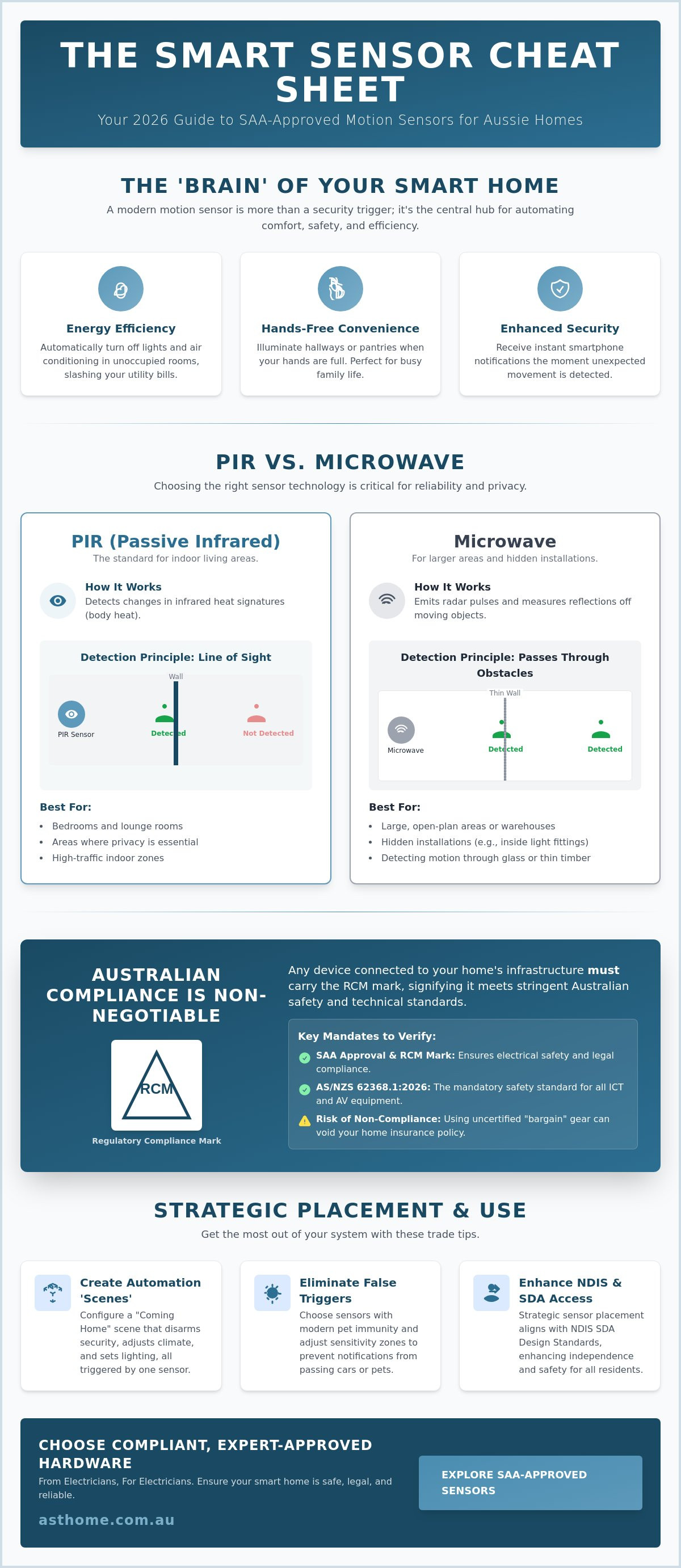
Selecting the right hardware for your Point Cook property depends entirely on the physical environment you're monitoring. Passive Infrared (PIR) sensors remain the industry standard for indoor living areas. These devices work by detecting changes in infrared heat signatures. They're incredibly energy-efficient and highly effective at identifying human movement without being triggered by a breeze or a moving curtain. Because they require a direct line of sight, they won't "see" through walls, making them ideal for bedrooms and lounge rooms where privacy is paramount.
Microwave sensors operate on a different principle. They emit high-frequency radar pulses and measure the reflection off moving objects. This technology is significantly more sensitive and can detect motion through thin timber walls, glass, and plastic. While this makes them perfect for large open-plan warehouses or hidden installations inside light fittings, they can be overactive in dense suburban builds. If you install a microwave motion sensor in a small ensuite, it might pick up movement in the adjacent hallway, leading to frustrating false triggers. Balancing these technologies is a key part of our "From Electricians, For Electricians" approach to system design.
Protocol stability is the hidden factor in a reliable smart home. If you're building or renovating in 2026, your choice between Zigbee and Matter will dictate your network's long-term health. Integrating your sensors with a smart light switch ecosystem ensures that your automations happen locally. This means your lights turn on instantly, even if your NBN connection drops out. For those starting a new project, you can explore our range of Australian-certified modules to find the right fit for your hub.
Matter vs. Zigbee: Future-Proofing Your Sensors
Zigbee 3.0 is a proven, low-power mesh standard. It's perfect for large Victorian homes because each mains-powered device acts as a repeater, strengthening the signal as you add more sensors. However, Matter is the new universal language for 2026. It allows cross-brand compatibility between Apple Home, Google Home, and Alexa without needing multiple bridges. Matter sensors are increasingly the preferred choice for new builds because they simplify the setup process and offer better security under the new mandatory cybersecurity standards effective from March 4, 2026.
Detection Ranges and Field of View
Mounting position determines your detection success. A 110° wall-mounted sensor is perfect for covering an entry point, while a 360° ceiling-mounted unit provides total coverage for a kitchen or garage. Sensitivity levels must be tuned to your household; modern units allow you to dial back the range to ignore small pets. Lux settings are the specific light-level thresholds that prevent your sensors from turning on lights during the day when natural sunlight is already sufficient. Finally, remember that SAA Approval for Australian Homeowners is a legal requirement. Installing non-compliant gear can void your insurance, so always check for the RCM mark on your hardware.
Busting Common Myths: False Triggers and Privacy Concerns
Many Point Cook residents hesitate to install a motion sensor because they fear their cat or dog will trigger the lights at 3 am. This is a legacy issue from older, "dumb" sensors that couldn't distinguish between a human and a household pet. Modern smart units feature adjustable pet immunity and sensitivity zones. You can configure these sensors to ignore objects under a certain weight or height, usually up to 25kg, ensuring your pets roam freely without activating your "Welcome Home" scenes or security alerts.
Privacy is another area where misinformation is common. A standard PIR motion sensor is not a camera. It doesn't record images, recognise faces, or stream video to the cloud. It simply monitors for changes in infrared heat signatures within its field of view. Your privacy remains intact because the device has no way of "seeing" who you are or what you're doing. It only knows that something warm is moving. With the mandatory cybersecurity standards arriving on March 4, 2026, these devices are more secure than ever against external interference.
Stopping False Triggers in Their Tracks
Correct installation is the best way to prevent annoying false alarms. Avoid pointing your sensors directly at heat vents, fireplaces, or windows where direct sunlight can cause rapid temperature spikes. These fluctuations can trick a PIR sensor into thinking someone has entered the room. Most smart apps now allow for software masking, which lets you "blind" specific areas of the sensor's view, such as a swaying plant or a ceiling fan. For those seeking the highest level of accuracy, here's a sneaky peak at mmWave presence detection. This advanced tech can detect a person sitting perfectly still, distinguishing them from inanimate objects with incredible precision.
Battery Life and Maintenance Realities
Maintenance is often a concern for wireless setups, but the reality is very manageable. If you utilise Zigbee 3.0 protocols, your motion sensor battery life can easily exceed 2 years. These low-power mesh networks ensure the device stays in a "sleep" state until it detects movement, preserving energy. You won't be left in the dark either; your Zigbee gateway will send a low-battery notification to your smartphone long before the power actually runs out. To keep detection sharp, simply wipe the lens with a microfibre cloth every six months to remove dust. Ensuring your hardware meets the Australian essential safety criteria is the final step in guaranteeing a reliable, long-term solution for your home.
Strategic Placement for Maximum Efficiency and NDIS SDA Access
Strategic placement transforms a basic motion sensor from a simple security tool into a sophisticated automation trigger. For Point Cook homes with multi-storey layouts, mounting a sensor at the top of the stairs ensures the path is illuminated before you take your first step. This proactive lighting setup is especially useful for families with young children or elderly residents. In modern open-plan designs, placing sensors in transition zones between the kitchen and living areas allows for seamless lighting that follows your movement without needing to touch a single GPO.
Utility spaces are where automation provides the most immediate relief. Laundries and garages are "full-hands" zones where fumbling for a switch is often impossible. A well-positioned sensor in the garage can trigger both the overhead lights and the internal entry door lock as soon as your car enters the driveway. Outdoors, sensors enhance the security of Point Cook patios and side passages. These areas often have blind spots that traditional cameras might miss, but a sensor can immediately flood the zone with light, deterring intruders before they reach an entry point.
The NDIS Advantage: Automation for Accessibility
The Specialist Disability Accommodation (SDA) Design Standard review, which concluded its consultation phase in December 2025, emphasises the role of assistive technology in fostering independence. For residents with limited mobility, a motion sensor is a vital interface. It can automate curtain motors and lighting without requiring physical contact with a wall switch. Safety triggers are equally important; floor-level LED lighting can activate automatically during midnight bathroom trips to prevent falls. Asthome Smart Electrical Supplies supports these requirements by providing trade-grade reliability that empowers long-term independence. You can browse our NDIS-ready smart home kits to start building a more accessible space today.
Creative Automations You Haven’t Thought Of
Smart sensors allow for logic-based scenes that go far beyond simple on-off commands. A "Good Morning" scene can be triggered by the first person entering the kitchen, which then opens the smart blinds and starts the kettle via a smart GPO. For those who travel, "Holiday Mode" uses motion data from the previous week to randomise lighting triggers, making the home look occupied even when it's empty. You can also integrate environmental sensors for better climate control. For instance, detecting motion in the bathroom while a humidity sensor identifies a spike in steam can automatically trigger the exhaust fan, preventing mould growth without any manual intervention.
Why SAA Approval is Non-Negotiable for Australian Homeowners
The "From Electricians, For Electricians" ethos isn't just a marketing slogan; it's a commitment to safety that defines every product we range. When you buy a motion sensor from a generic international marketplace, you're often gambling with hardware that hasn't been tested against the unique demands of the Australian grid. Trade-grade gear is designed to handle our specific 230V voltage fluctuations and environmental heat. SAA certification ensures that your device meets the rigorous AS/NZS safety standards, which is critical for equipment that remains powered 24/7 within your wall cavities or ceiling spaces.
Non-compliant smart gear carries hidden risks that far outweigh any initial savings. Devices designed for overseas markets often lack the necessary insulation or surge protection required by the Electrical Equipment Safety System (EESS). In Australia, sensors are often classified as "Level 3" equipment, meaning they must be certified before they can carry the Regulatory Compliance Mark (RCM). If a faulty, uncertified sensor causes damage to your property, the consequences are severe, both legally and financially. Local support means you have a partner who understands these regulations and ensures your tech actually works as intended from the moment of installation.
Insurance and Compliance: What You Need to Know
Installing a non-SAA approved motion sensor can immediately void your home insurance policy. Most Australian insurers require that all electrical equipment connected to the building's infrastructure meets local safety regulations. If a fire investigation traces the source back to a non-certified smart module, your claim will likely be rejected. It's important to remember that European CE marking is not a substitute for SAA approval in Australia. While many sensors are battery-powered, any hardwired smart switch modules or GPOs must be installed by a licensed electrician to maintain your property's compliance. This ensures your installation adheres to the hazard-based safety engineering approach mandated by the AS/NZS 62368.1:2026 standard.
The Asthome Smart Electrical Supplies Quality Guarantee
We eliminate the guesswork for homeowners and tradespeople by sourcing only the highest-calibre hardware. Every sensor in our inventory is SAA approved for Australia and has undergone rigorous testing to ensure it survives the transition to a modern smart home. For Point Cook sparkies, Asthome Smart Electrical Supplies offers specialised trade accounts that provide access to premium, compliant gear at trade prices. This allows local practitioners to install hardware they can trust, backed by a business run by people who have worked on the tools themselves. Choosing us means you get direct local support and a sneaky peak at the latest tech before it hits the mainstream retail market. You can create a trade account or browse our certified range to ensure your next project is built on a foundation of safety and reliability.
Future-Proof Your Point Cook Home with Smart Automation
Mastering your home's automation begins with choosing the right detection technology for each specific space. Whether you opt for the precision of PIR in your lounge or the wall-penetrating range of Microwave sensors for larger zones, your motion sensor setup must be built on a foundation of safety. The March 4, 2026 cybersecurity standards and the mandatory AS/NZS 62368.1:2026 regulations mean that uncertified imports are no longer a viable option for savvy Victorian homeowners.
At Asthome, we provide gear that is "From Electricians, For Electricians." Every device we range is SAA Approved for Australia; this ensures your insurance remains valid and your electrical system stays compliant. We offer Point Cook local support to help you navigate technical protocols like Matter and Zigbee 3.0, ensuring your automation scenes remain stable and responsive. Don't leave your home's "brain" to chance with uncertified hardware.
Ready to upgrade your property? Browse our SAA-Approved Smart Motion Sensors and start creating energy-efficient, responsive living spaces today. It's time to eliminate the guesswork and invest in trade-grade reliability that actually works.
Frequently Asked Questions
Do I need a hub for my smart motion sensor?
Most professional grade sensors using Zigbee or Matter protocols require a dedicated Zigbee Gateway Hub to communicate with your home network. While Wi-Fi models connect directly to your router, they often consume more power and can congest your bandwidth. Using a hub ensures your automations remain local and reliable even if your internet connection drops out.
Are motion sensors weatherproof for outdoor use in Victoria?
Only specific models with an appropriate Ingress Protection (IP) rating are suitable for the Victorian climate. Look for an IP65 or higher rating to ensure the device is protected against heavy rain and dust. Every outdoor motion sensor we supply is SAA Approved for Australia to handle our local UV and temperature extremes.
Can I install a motion sensor myself or do I need an electrician?
You can safely install battery powered wireless sensors yourself as they don't involve mains wiring. However, any hardwired solution or the installation of a smart switch module must be performed by a licensed electrician. This is a legal requirement in Australia and ensures your home insurance remains valid under current safety standards.
How long do the batteries last in a Zigbee motion sensor?
A Zigbee based motion sensor typically lasts between 18 and 24 months on a single coin cell battery. This longevity is due to the low power mesh protocol which keeps the device in a sleep state until movement is detected. In contrast, Wi-Fi versions often require battery changes every few months.
Will my dog trigger the motion sensor lights every night?
Modern smart sensors feature adjustable pet immunity that prevents animals under 25kg from triggering your lights. By configuring sensitivity zones in your app, you can effectively "blind" the sensor to floor level movement. This ensures your dog can move around at night without activating your security scenes.
What is the difference between a motion sensor and a presence sensor?
A standard motion sensor detects significant physical movement across its field of view. A presence sensor, often using mmWave technology, is far more sensitive and can detect micro movements like breathing. This allows the system to keep lights on while you're sitting perfectly still reading a book.
Can a motion sensor work with my existing non-smart LED downlights?
Yes, your existing LED downlights can be integrated into your smart system using a Zigbee 3.0 Smart Switch Module. This module sits behind your wall switch and allows the sensor to trigger your "dumb" lights through the smart hub. It's a cost effective way to automate your home without replacing every globe.
Is it worth upgrading to Matter-compatible sensors in 2026?
Upgrading to Matter compatible sensors is highly recommended in 2026 for seamless cross brand compatibility. Matter allows you to mix devices from Apple, Google, and Amazon without needing multiple bridges. These devices also meet the new mandatory cybersecurity standards effective from March 4, 2026, providing better data protection.