

What if the very technology installed to grant you independence ends up being the biggest point of failure in your home? It's a valid concern for anyone navigating ndis sda smart home technology australia, where the gap between a consumer gadget and a life-critical accessibility tool is often blurred. You've likely worried about hardware failing during a critical moment or spending thousands on a system that doesn't meet the rigorous SAA certifications required for Australian electrical safety standards.
We agree that safety and reliability shouldn't be a guessing game, especially with the NDIS SDA Design Standard Edition 2.0 review currently shaping the future of assisted living. This guide will show you how to identify and install future-proof hardware, from Zigbee 3.0 modules to Matter-compatible smart GPOs, that meet High Physical Support requirements. We'll walk through the process of sourcing certified components that align with the 2025-26 SDA pricing arrangements, ensuring your home remains a safe, autonomous space for the long term.
Key Takeaways
- Understand why SAA certification is mandatory for all 240V smart modules to ensure insurance compliance and participant safety.
- Learn how to select the correct ndis sda smart home technology australia to satisfy High Physical Support (HPS) and Robust design categories.
- Compare the benefits of Zigbee 3.0 mesh networks against the new Matter universal standard for long-term system interoperability.
- Identify essential hardware like smart switch modules and curtain motors that increase autonomy without requiring complex structural changes.
- Discover how sourcing Australian-stocked hardware through trade accounts simplifies compliance for SDA builders and providers.
Understanding NDIS SDA Smart Home Technology in Australia
The landscape of disability housing has shifted. In 2026, ndis sda smart home technology australia is no longer a luxury add-on. It's a fundamental requirement for modern Specialist Disability Accommodation (SDA). We've moved past the era of standalone gadgets that don't talk to each other. Today, the focus is on integrated Assistive Technology (AT) that provides genuine autonomy. This shift is largely driven by the industry-wide adoption of the Matter protocol, which finally allows different brands of hardware to work together seamlessly within a single ecosystem. For Victorian homes, this means transitioning from "cool features" to essential accessibility infrastructure that is built into the very walls of the dwelling.
When we discuss home automation for people with disabilities, we're looking at systems that manage lighting, climate, and access control with zero friction. For SDA providers, this means building tech-ready environments from the slab up. By using SAA-certified modules and Zigbee 3.0 protocols, builders can create a reliable mesh network that doesn't fail when the internet drops out. This reliability is the backbone of participant safety and independent living. At Asthome Smart Electrical Supplies, we've seen this transition first-hand, moving from simple remote controls to fully automated environments that respond to a participant's presence.
The Four SDA Design Categories and Tech Integration
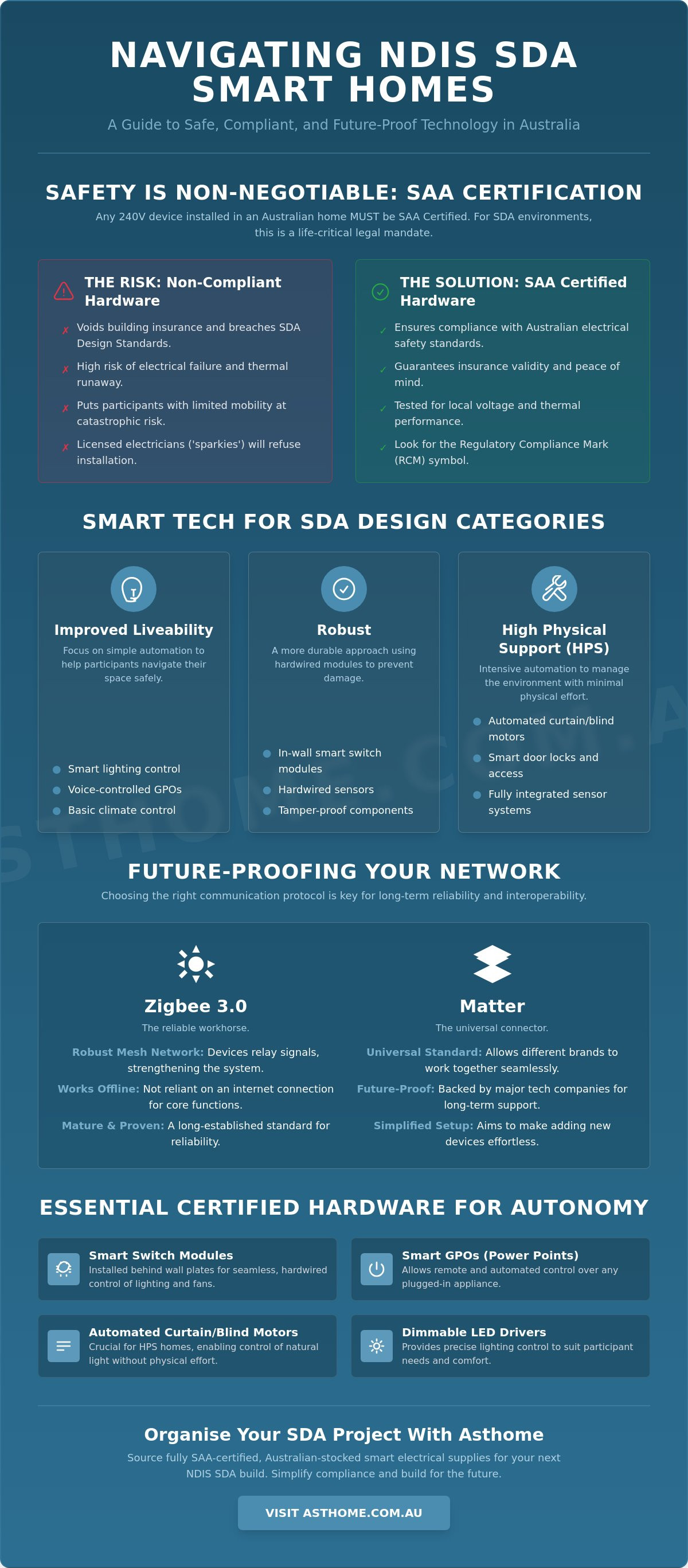
The SDA Design Standard Edition 2.0 has clarified how ndis sda smart home technology australia fits into specific housing categories. In Improved Liveability homes, the focus is on simple automation. This usually involves smart lighting and voice-controlled GPOs to help participants navigate their space safely. Robust builds require a more durable approach. We prioritise hardwired modules, like the Zigbee 3.0 Smart Switch Module, which are installed behind the wall plate to prevent physical damage while maintaining full connectivity. High Physical Support (HPS) dwellings have the most intensive requirements. These homes rely on automated curtain motors, smart door locks, and integrated sensors to ensure a participant can manage their environment with minimal physical effort.
Why Local Point Cook Builders are Prioritising Smart Infrastructure
Builders and developers across Australia are seeing the commercial and ethical benefits of smart infrastructure. It's a strategic move. Tech-integrated homes attract long-term tenants and significantly reduce the operational costs for On-site Overnight Assistance (OOA). By partnering with a specialised provider like Asthome Smart Electrical Supplies to source SAA-certified smart power points and dimmable LED drivers during the initial construction phase, providers future-proof their assets against rapid obsolescence. This approach empowers participants to manage their own environment, which directly correlates to higher tenant satisfaction. It's about creating a high-performance accessibility centre that meets the growing demand for sophisticated, tech-ready disability housing in the local market.
SAA Certification and Compliance: Why Safety is Non-Negotiable
Safety isn't a checkbox. It's a legal mandate. In Australia, any device connecting to the 240V mains power supply must carry SAA certification. When you're managing ndis sda smart home technology australia, the stakes are significantly higher than a standard residential project. High-dependency environments demand hardware that has been tested for local voltage fluctuations and thermal performance. Importing uncertified smart switches from overseas might seem like a cost-saving measure, but it's a dangerous risk. It voids building insurance and directly breaches the mandatory SDA Design Standard, which can lead to catastrophic failure in a life-critical environment.
Your licensed electrical contractor acts as the primary gatekeeper for this safety. A professional "sparky" is legally responsible for every component they install behind the wall plate. If they encounter hardware without the Regulatory Compliance Mark (RCM), they're within their rights to refuse the installation to protect their licence. This tick-in-a-triangle symbol is the visual proof that the hardware meets Australian safety standards. It's your primary shield against electrical failure and thermal runaway in properties where residents may have limited mobility or communication.
The Risks of Non-Compliant Hardware in SDA
The consequences of using non-compliant gear go far beyond a simple product failure. In High Physical Support (HPS) dwellings, a fire hazard caused by a sub-standard module is a life-threatening scenario. Participants may have limited mobility, making rapid evacuation difficult without assistance. From a business perspective, SDA providers face significant legal liabilities and the potential loss of NDIS funding. If a dwelling fails a safety audit due to uncertified 240V modules, it can be de-enrolled from the NDIS immediately, halting all SDA payments and requiring expensive remedial works to regain compliance.
Verifying Your Smart Modules Before Installation
Don't take a supplier's word for it. Always request the SAA certificates from your electrical wholesaler before the first fix begins. We understand the pressure to keep construction timelines on track, which is why Asthome Smart Electrical Supplies prioritises SAA-certified Matter and Zigbee modules specifically for the Australian market. SAA certification is the gold standard for Australian electrical safety in 2026 because it guarantees that every module has been independently verified to withstand local conditions. If you're looking for trade-ready hardware that won't fail a safety audit, you can browse our range of certified smart modules to ensure your project stays compliant and your tenants stay safe.
Matter vs. Zigbee: Choosing the Right Protocol for SDA Homes
Selecting the right communication protocol is the most critical technical decision you'll make for ndis sda smart home technology australia. It's the digital language that allows your switches, sensors, and motors to talk to each other. In 2026, the industry has largely converged on two standards: the established Zigbee 3.0 and the emerging Matter protocol. Both offer local control, which is vital in a disability context. You don't want a participant unable to operate their bedroom lights or adjust their climate control just because the internet connection dropped out. Local control ensures that commands stay within the home's walls, providing a faster and more reliable response time.
Reliability is the primary concern for High Physical Support (HPS) homes. While Wi-Fi gadgets are common in retail stores, they often suffer from congestion and cloud dependency. For a professional SDA build, we look for protocols that create a dedicated network for automation. This keeps the accessibility infrastructure separate from the resident's personal internet traffic, ensuring that critical systems like emergency alerts and automated door locks always have the bandwidth they need to function.
Matter Smart Switches: The Future-Proof Choice
Matter is the new universal standard that has finally solved the problem of device interoperability. It allows hardware from different manufacturers to work together natively across Apple Home, Google Home, and Amazon Alexa. For SDA participants, this is a game-changer for autonomy. They can use whichever voice assistant they find most accessible without worrying if the hardware is compatible. Setup is straightforward, usually involving a simple QR code scan. Because Matter-over-Thread devices communicate directly with each other, they don't rely on a specific manufacturer's hub to function. For a deep dive into the technical specifications, read our Matter Smart Switch Australia: The 2026 Guide.
Zigbee 3.0: The "Rock-Solid" Retrofit Standard
While Matter is the future, Zigbee 3.0 is the proven workhorse of the industry. It's a low-power mesh network where every mains-powered device acts as a signal repeater. This creates a robust network that can cover every corner of a large SDA villa or multi-resident complex. Zigbee is particularly superior for battery-powered devices like smart motion sensors or temperature sensors. The protocol's efficiency means batteries can last for years rather than months. It's an ideal choice for retrofitting existing SDA properties where pulling new wires isn't feasible. Our Zigbee 3.0 Smart Switch Module Australia guide provides specific tips for trade professionals on building these reliable mesh networks.
A hybrid approach is often the most effective strategy for modern SDA projects. You might use a Zigbee Gateway Hub to manage a dense network of sensors and curtain motors, while using Matter-certified light switches for easy integration with a participant's preferred tablet or voice interface. This combination provides the reliability of a mesh network with the flexibility of a universal standard. It ensures the home remains adaptable as the participant's needs or technology preferences evolve over time.
Essential Smart Hardware for High Physical Support (HPS) Homes
Most SDA guides discuss "smart homes" as a vague concept. We prefer to focus on the specific hardware modules that make these spaces functional. In a High Physical Support (HPS) environment, the hardware must be invisible yet omnipresent. Smart Switch Modules are the primary building blocks here. These small units sit behind your existing wall plates, allowing a participant to control lighting via voice or tablet without losing the familiar tactile switch. It's about maintaining a residential aesthetic while adding a layer of ndis sda smart home technology australia that works every single time.
Automated Curtain Motors and tracks are equally vital. For a participant with limited upper-body mobility, the ability to manage privacy and natural light independently is a significant win for autonomy. When these motors are paired with a Zigbee Gateway Hub, they can be scheduled to follow the sun or respond to voice commands. This removes a daily physical hurdle and reduces the reliance on support workers for simple environmental adjustments.
Smart GPOs (Power Points) provide a safety layer that traditional outlets cannot match. These allow for remote isolation of appliances and, more importantly, energy monitoring. By tracking the power draw of a specific outlet, the system can send an alert if a critical device, such as a motorised bed or specialized medical equipment, suddenly stops drawing power. This proactive data collection is what separates a standard smart home from a dedicated disability support environment.
Automating Entry and Lighting for Independence
Secure access is a priority for HPS dwellings. Integrating a Smart Door Lock with an intercom system allows participants to verify visitors and grant access from their bed or wheelchair. We often recommend setting up "Arrival Scenes" for residents. With one command, the front door unlocks, the hallway lights illuminate, and the lounge room curtains open. For older Australian homes undergoing a retrofit, we utilise "No Neutral" switch modules. These are specifically designed for Australian wiring looms where a neutral wire wasn't originally run to the light switch, saving thousands in invasive electrical work.
Climate and Energy Management
Maintaining a stable internal climate is often a medical necessity for SDA participants. By placing Smart Temperature and Humidity Sensors in each room, the home can automatically trigger air-conditioning via Zigbee modules when specific thresholds are met. This ensures the environment remains safe even if the participant cannot manually adjust a thermostat. If you are looking for a coordinated system that works out of the box, you can buy NDIS SDA smart home kit Australia online to ensure all components are pre-configured for interoperability. You can also explore our trade-ready smart hardware to find the specific modules needed for your next HPS project.
Organising Your SDA Project with Asthome Smart Electrical Supplies
Executing a successful SDA build requires more than just a list of hardware. It demands a reliable supply chain and technical clarity from the first electrical rough-in to the final commissioning. We understand that project managers and builders often face delays when sourcing specialized components. By keeping our stock local in Point Cook, we eliminate the long lead times associated with international shipping. This ensures your ndis sda smart home technology australia project stays on schedule, with every module arriving on-site ready for installation by your licensed electrical contractor.
Our approach is rooted in a professional trade heritage. We aren't just a retail outlet; we are practitioners providing solutions for fellow practitioners. This means when a sparky has a technical question about wiring a Matter Smart Switch Module or configuring a Zigbee Gateway Hub, they can access peer-to-peer support. We provide the technical specifications and wiring diagrams needed to ensure the installation is compliant, safe, and efficient. This level of specialized support is critical when integrating the emerging standards discussed earlier into a high-stakes disability support environment.
Trade Accounts for Licensed Electricians
Large-scale SDA developments require a different level of service than a standard residential job. Asthome Smart Electrical Supplies offers dedicated trade accounts for licensed electricians and registered NDIS builders to facilitate bulk ordering and wholesale pricing. This streamlined process allows you to manage the electrical schedule across multiple villas or apartments with ease. Every piece of gear we supply meets Victorian electrical safety standards, giving you peace of mind that your project will pass the mandatory SDA certification audits. We prioritise technical brevity in our documentation, ensuring that critical data like electrical ratings and RCM status is immediately available for your compliance files.
To keep your physical project documentation and compliance records perfectly organised, you can discover Mega Office Supplies for a wide range of professional filing solutions and office essentials.
Tailored Solutions for Participants and Carers
The ultimate goal of any SDA build is to create a home that adapts to the participant, not the other way around. We focus on providing hardware that is inherently user-friendly. A smart home shouldn't require a tech degree to operate. Whether it's a Smart Zigbee Dimmer Module for sensory lighting or a Smart Door Lock for secure access, the interface must be intuitive for both the participant and their support team. Our kits are designed to be scalable. You can start with essential lighting and entry automation and add more sensors or GPOs as the participant's needs evolve over time. This future-proof approach prevents the system from becoming obsolete and ensures long-term value for the SDA provider.
Ready to finalise your hardware schedule? You can Explore our NDIS SDA Compliant Smart Home Kits to find pre-configured solutions that meet the highest standards of independence and safety. Our team is here to help you bridge the gap between complex technical protocols and practical, reliable accessibility infrastructure for the Australian market.
Future-Proofing Your SDA Project with Certified Technology
Building a home that truly empowers participants requires a shift from consumer-grade gadgets to trade-standard infrastructure. You now understand that SAA certification isn't optional; it's the non-negotiable foundation of electrical safety and insurance compliance for every 240V module. By selecting between the universal interoperability of Matter or the rock-solid mesh networking of Zigbee 3.0, you ensure that your ndis sda smart home technology australia investment remains functional and safe for the long term.
As an Australian owned and operated business in Point Cook, we pride ourselves on being practitioners who support the trade. Our specialised trade accounts provide SDA builders with the wholesale pricing and technical support required for complex High Physical Support developments. We stock the modules, sensors, and motors you need to deliver on the promise of participant autonomy without the risk of hardware obsolescence. Ready to finalise your electrical schedule with hardware you can trust? You can Browse SAA-Certified NDIS SDA Smart Home Kits to secure your project's compliance today. Let's build homes that offer genuine independence and peace of mind for every resident.
Frequently Asked Questions
What is the best smart home protocol for NDIS SDA homes in Australia?
Zigbee 3.0 and Matter are the leading choices for professional-grade reliability in 2026. Zigbee creates a rock-solid mesh network that is perfect for low-power sensors and curtain motors. Matter provides universal compatibility, allowing participants to use their preferred voice assistant. Choosing these local control protocols ensures your ndis sda smart home technology australia setup remains fully responsive even if the internet connection is interrupted.
Is smart home technology covered by NDIS SDA funding?
Assistive Technology (AT) is a core component of the SDA Design Standard, particularly for the High Physical Support and Robust categories. While the SDA payment covers the dwelling itself, specific smart home hardware is often funded through the participant’s AT budget. You should verify the latest 2025-26 SDA pricing arrangements to see how technology integration affects your specific housing category and funding eligibility.
Does smart home hardware need to be SAA certified for SDA dwellings?
Yes, every 240V smart module or GPO must carry SAA certification to be legally installed in Australia. This certification ensures the hardware meets strict national safety standards for electrical fire prevention. Using uncertified gear from overseas voids building insurance and breaches the mandatory safety requirements for any registered SDA provider or builder. Always look for the Regulatory Compliance Mark (RCM) on the hardware.
Can I retrofit smart home tech into an existing SDA property?
Retrofitting is straightforward when using "No Neutral" Zigbee or Matter modules. These devices are designed to fit behind existing wall plates in older Australian homes where a neutral wire isn't present at the switch. This allows you to upgrade an existing property to meet modern accessibility standards without the high cost of invasive structural re-wiring or damaging the walls of a Robust-category home.
How do smart curtain motors help NDIS participants?
Smart curtain motors provide essential autonomy for participants with limited upper-body mobility. By automating blinds and tracks, residents can manage their privacy and natural light independently via voice commands or a tablet. This reduces the need for physical intervention from support workers. It ensures the environment is always comfortable while helping participants maintain their dignity and control over their personal space.
What happens to the smart home if the internet goes down?
System functionality remains intact if you use local control protocols like Zigbee 3.0 or Matter. Unlike standard Wi-Fi gadgets that rely on external cloud servers, these professional-grade modules communicate directly with a local gateway hub or each other. This means participants can still operate their lights, doors, and curtains during a total internet outage. Reliability is critical in disability accommodation, and local control is the only way to guarantee it.
Do I need a special electrician to install Matter smart switches?
Any licensed electrical contractor can install Matter or Zigbee hardware. The physical installation is identical to a standard switch or power point. However, the electrician should be comfortable with the digital pairing process using a smartphone or tablet. We provide technical support for sparkies who are new to ndis sda smart home technology australia to ensure the commissioning process is smooth and the final handover is successful.
Are smart power points (GPOs) safe for disability accommodation?
SAA-certified smart GPOs are extremely safe and add a vital layer of protection to the home. They allow carers to remotely isolate dangerous appliances and monitor energy usage in real-time. This monitoring can detect if a critical medical device has lost power or if an appliance has been left on accidentally. It provides an early warning system that traditional outlets simply cannot offer, increasing safety for both residents and staff.