

What if your home could anticipate your needs without looking like a clinical facility? For many Australians, the search for assistive technology for independent living often leads to a confusing maze of NDIS SDA compliance requirements and technical jargon that feels more like a barrier than a solution. You've likely felt the frustration of trying to find hardware that's actually SAA-certified, fearing that a non-compliant install might void your insurance or fail when you need it most.
We agree that navigating the 2026 NDIS Pricing Arrangements shouldn't require a degree in electrical engineering. This guide promises to show you how modern smart home hardware and NDIS-compliant electrical systems are revolutionising independence for Australians living with disability. We'll preview the latest Matter 1.6 and Zigbee 4.0 standards, explain how to reduce reliance on physical carers for simple tasks, and ensure your home automation setup is future-proofed for years to come. By focusing on certified modules and professional-grade protocols, you can build a home that is both safe and truly autonomous.
Key Takeaways
- Learn how to transition from clinical-looking aids to discreet, integrated smart home ecosystems that align with the 2026 NDIS standards.
- Understand why selecting the right protocol, such as Matter 1.6 or Zigbee 4.0, is the foundation of a reliable and future-proof assistive setup.
- Discover how SAA-certified switch modules and curtain motors serve as vital assistive technology for independent living by automating daily physical tasks.
- Master the planning process for a successful SDA retrofit, from conducting essential electrical audits to collaborating effectively with Occupational Therapists.
- Find out how sourcing local, trade-tested hardware ensures your home automation meets strict Australian safety regulations and insurance requirements.
What is Assistive Technology for Independent Living in Australia?
In the context of the NDIS, What is Assistive Technology refers to any equipment or system that helps a participant perform tasks they might otherwise find difficult or impossible. Traditionally, this meant physical aids like handrails or specialised cutlery. However, the definition of assistive technology for independent living has evolved rapidly. It now encompasses sophisticated smart home ecosystems that integrate directly into the building's electrical fabric to support daily autonomy.
We're seeing a massive shift away from clinical hardware. Most Australians don't want their living room to look like a hospital ward. They want Invisible AT. This is technology that hides behind the scenes to provide independence without the medical aesthetic. It includes automated lighting, climate control, and smart door locks that blend into modern Australian home design. By prioritising "invisible" solutions, we can create spaces that feel like homes first and care environments second.
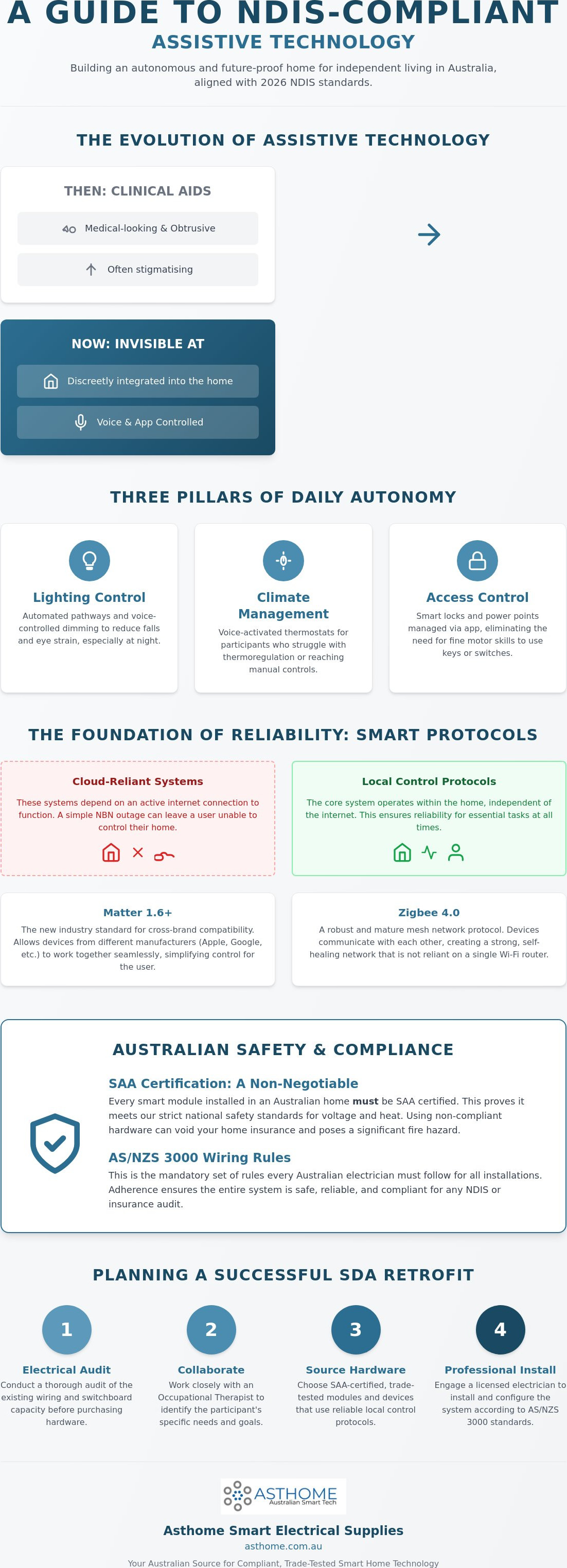
Invisible AT focuses on three core pillars of autonomy:
- Lighting Control: Automated pathways and dimming to reduce falls and eye strain during the night.
- Climate Management: Voice-activated thermostats for participants who struggle with thermoregulation.
- Access Control: Smart locks and GPOs that can be managed via app without needing fine motor skills.
The Role of Smart Home Tech in Modern AT
Voice and app-based controls are game changers for those with limited mobility. Instead of struggling with a physical wall switch, a participant can adjust the entire room's environment with a simple command. Reliability is the non-negotiable factor. While off-the-shelf consumer gear might be fine for a hobbyist, it often fails the independence test due to connectivity drops or lack of local control. Investing in robust NDIS SDA smart home technology Australia ensures the system remains operational even if the internet goes down, providing true peace of mind for long-term living.
Regulatory Standards: SAA Certification and AS3000
Safety isn't just a buzzword; it's a legal requirement. Every smart module installed in an Australian home must carry SAA certification to prove it meets our strict national safety standards. Using non-compliant grey-market hardware is a massive risk. It can void your home insurance and pose a fire hazard. We've seen plenty of cheap imports that don't handle Australian voltages or heat conditions correctly. For a successful Specialist Disability Accommodation (SDA) build, compliance is everything. Your installer needs to know the hardware is fit for purpose and won't cause issues during an audit. The AS3000 standard is the mandatory set of "Wiring Rules" every Australian sparky must follow.
The Smart Protocol Revolution: Matter and Zigbee for SDA
Choosing a smart home protocol isn't just a minor technical detail. It's the foundation of how your home functions. In 2026, the success of assistive technology for independent living depends on selecting a communication standard that prioritises local control over cloud reliance. If your system depends entirely on the internet, a simple NBN outage could leave a participant unable to turn on the lights or unlock the front door. We focus on protocols that keep the home running regardless of your internet connection status.
The release of Matter 1.6 in June 2026 has solidified it as the new standard for cross-brand compatibility. Matter allows devices from different manufacturers to speak the same language. This means an Apple HomePod can control a smart switch originally designed for a Google ecosystem without any lag. For participants, this simplifies the user interface. They can use the voice assistant or tablet they're already comfortable with, rather than learning a new, complex system. This level of integration is supported by the Australian Government's Assistive Technology and Home Modifications (AT-HM) scheme, which recognises the value of reliable, integrated home systems for long-term independence.
Why Matter Smart Switches are a Game Changer
Matter-enabled hardware removes the "walled garden" problem that plagued earlier smart homes. When you install a matter smart switch, you're future-proofing the property. A home built today will still be compatible with devices released in 2030. It simplifies the setup for electrical contractors and participants alike. You get one app to manage everything, reducing the cognitive load for users who might struggle with multiple, disjointed interfaces. It's about making the technology serve the person, not the other way around.
The Reliability of Zigbee Mesh Networks
While Matter is the emerging star, Zigbee 3.0 remains the gold standard for low-power reliability, especially in larger SDA developments. Unlike Wi-Fi devices that can clog up a home router, Zigbee creates a mesh network. Each device acts as a repeater, strengthening the signal across the entire house. This is particularly useful when using a zigbee 3.0 smart switch module australia for retrofitting older homes with thick brick walls. A Zigbee Gateway Hub centralises this control, ensuring that sensors and switches respond instantly without latency. This local "brain" ensures the home remains safe and responsive even during peak network congestion. If you're planning a new project, our SAA-certified smart modules provide the reliable backbone needed for high-stakes environments.
By combining these protocols, we can create a redundant system. Matter provides the ease of use and broad compatibility, while Zigbee offers the industrial-grade stability required for critical tasks like motion-activated lighting or emergency alerts. This hybrid approach ensures that assistive technology for independent living is both accessible and bulletproof.
Essential Smart Hardware for Daily Independence
Selecting the right hardware is where the theory of a smart home meets the reality of daily life. For many Australians, assistive technology for independent living starts with the electrical fittings already in the wall. Instead of replacing every fixture, smart switch modules allow you to retrofit existing wall plates. This preserves the home's aesthetic while adding voice and automation capabilities. It's a practical, cost-effective way to gain control over your environment without a total rebuild.
Smart Power Points (GPOs) are equally vital. These allow participants or carers to monitor and manage high-draw appliances like heaters or kettles remotely. If a device is accidentally left on, it can be shut down via an app, preventing fire risks and reducing energy waste. These devices aren't just gadgets; they're SAA-certified safety tools designed for high-stakes environments. They provide a level of oversight that traditional outlets simply cannot match.
Automating the Environment: Lighting and Curtains
Lighting is a major factor in home safety. Using smart light switches can significantly reduce fall risks at night. You can set schedules or use voice commands to illuminate hallways before getting out of bed. For participants with sensory sensitivities, integrating dimmable LED drivers allows for precise control over brightness and colour temperature. This creates a calming environment that can be adjusted throughout the day to match natural circadian rhythms.
Automated curtain motors and tracks provide more than just convenience. In cities like Melbourne and Sydney, where temperatures can fluctuate wildly, automated window coverings are essential for thermoregulation. They can close automatically when the sun hits a certain intensity, keeping the home cool and lowering energy bills. For those with limited upper body strength, removing the physical strain of pulling heavy drapes is a significant win for daily autonomy. It ensures privacy is maintained without needing to wait for a carer's visit.
Safety and Monitoring with Smart Sensors
Sensors act as the eyes and ears of a smart home. Using motion sensors is the most effective way to trigger "if-this-then-that" routines. For example, a sensor near the bed can trigger dim pathway lighting to the bathroom at 2 AM. It's hands-free, reliable, and requires zero user input once configured. This automation is a core component of assistive technology for independent living, as it proactively manages the environment.
Temperature and humidity sensors are critical for participants who may not feel or react to environmental changes. A smart system can trigger air conditioning or fans based on real-time data, ensuring the room stays within a safe range. Finally, smart door locks provide secure, keyless entry. You can grant temporary access codes to support workers or family members, removing the need for physical keys and providing a digital log of who enters the home. This layer of security is a cornerstone of safe, independent living in 2026.
Planning an NDIS SDA Compliant Retrofit
A successful implementation of assistive technology for independent living begins long before the first module is wired in. It starts with a detailed consultation with an Occupational Therapist (OT) to identify the participant's specific functional goals. Whether the aim is to manage lighting without physical switches or to secure the home remotely, the hardware must align with these clinical requirements. This collaborative approach ensures the technology solves real-world challenges rather than just adding digital clutter to the home.
Before purchasing any gear, your electrical contractor needs to perform a thorough audit of the property's existing wiring. Many modern smart modules require a neutral wire at the switch to maintain a constant power supply for the radio chip. You also need to check the depth of the wall boxes. Australian wall cavities can be tight, and ensuring there's enough space to house a module behind the existing switch plate is vital for a clean, compliant finish. Selecting SAA-certified hardware that specifically meets the "High Physical Support" or "Robust" SDA categories will prevent costly compliance failures during NDIS audits.
Meeting SDA Standards with Smart GPOs
Accessible power points are a mandatory requirement in many SDA builds, but physical accessibility is only half the battle. Installing smart power points (GPOs) allows participants to control appliances that would otherwise be out of reach. These devices assist with energy monitoring and safety by allowing carers to set timers or remotely cut power to high-risk appliances like kettles or heaters. Our modules are designed to fit seamlessly within standard Australian wall plates, ensuring you don't have to compromise on the home's aesthetic to achieve high-level functionality.
Working with Licensed Professionals
DIY smart home setups are a major risk in a professional care environment. They can jeopardise NDIS funding and may even void your home insurance if a fault occurs. You must engage a licensed sparky who has experience with smart home protocols like Matter and Zigbee. Once the installation is complete, they'll provide a Certificate of Electrical Safety (CES), which is an essential document for proving the home meets Australian standards.
Asthome Smart Electrical Supplies provides specialised NDIS SDA compliant smart home kits that are trade-tested and ready for professional installation. This removes the guesswork for contractors and provides peace of mind for participants. Testing and iterating the setup is the final step; the user interface must be intuitive for the person living there. If a voice command is too complex or an app is too cluttered, the technology isn't doing its job. By working with professionals and using certified hardware, you build a foundation for true, long-term independence.
Why Asthome is Australia’s Choice for Assistive Technology
Choosing a partner for assistive technology for independent living involves more than just picking products from a catalogue. It requires trust in the supplier's technical literacy and their commitment to Australian standards. At Asthome Smart Electrical Supplies, we operate as a business run by practitioners for practitioners. This peer-to-peer approach means we speak the same language as the electrical contractors on the ground. We understand the specific licensing requirements and the pressure of meeting tight NDIS deadlines. We aren't just shifting boxes; we're providing the technical backbone for safer, more autonomous homes.
All our stock is held locally in Point Cook, Victoria. This ensures fast, reliable delivery across Australia, avoiding the long lead times often associated with international shipments. When you're managing an SDA project, you can't afford to wait weeks for a gateway hub or a smart switch module. Our local presence means you get the gear when you need it. Every order is backed by support from a team that understands the regional trade industry and the high stakes of disability support environments.
SAA Certified: Your Safety Guarantee
Safety is the primary seal of authenticity for any electrical install. Our rigorous testing process ensures every device handles the specific electrical conditions of the Australian grid, including our unique voltage fluctuations and heat. All Asthome Smart Electrical Supplies Matter and Zigbee modules are fully compliant with AU standards and carry the necessary SAA certification. This provides a rhythmic safety anchor for your project. If an insurance claim arises or a compliance audit is conducted, having locally certified hardware with a genuine Australian warranty is your best protection. We don't cut corners on regulatory adherence because we know the risks involved in this industry.
Trade Support for NDIS Providers
We assist electrical businesses in quoting for complex SDA projects by providing detailed technical documentation and bulk pricing options for large-scale developments. Our expertise helps sparkies navigate the technical jargon of smart home protocols, ensuring the chosen system is fit for purpose. Whether you're retrofitting a single villa or developing a multi-unit independent living complex, we provide the specialised resources needed to succeed. Asthome Smart Electrical Supplies aims to simplify the technical side of assistive technology for independent living so that providers can focus on delivering better outcomes for their participants. Our trade accounts offer the pricing and priority support required for professional-grade work.
Enquire about a Trade Account or browse our NDIS SDA kits today to see how we can support your next project with reliable, SAA-certified hardware.
Future-Proof Your Home for Independent Living
The landscape of disability support is changing. By moving away from clinical aids and embracing integrated, SAA-certified smart modules, we can create environments that support autonomy without compromising on style. We've seen that the combination of Matter 1.6 compatibility and robust Zigbee mesh networks ensures your home remains responsive even during NBN outages. It's about building a foundation that is safe, compliant, and ready for the technical standards of 2030.
Implementing assistive technology for independent living requires the right hardware and the right partners. As an Australian owned and operated business, we provide the trade-tested tools needed to meet strict SDA requirements. From smart GPOs to automated curtain tracks, our gear is designed to help participants reclaim their daily routines. Licensed electricians can also access exclusive trade pricing to support their NDIS projects. We focus on quality because we know that in a care environment, reliability is the only metric that matters.
Shop SAA-Certified NDIS SDA Smart Home Kits today and take the first step toward a more autonomous future. We're here to help you build a home that truly works for everyone.
Frequently Asked Questions
Is smart home technology covered by NDIS funding?
Yes, smart home systems are often funded through the NDIS if they're deemed reasonable and necessary for your specific needs. You'll typically need an Occupational Therapist to justify how the gear supports your functional goals. It falls under the assistive technology for independent living category within your plan. Always check the latest 2026-27 Pricing Arrangements to see how these items are categorised before making a purchase.
Do I need a neutral wire to install smart switches in an older Australian home?
Most high-quality smart switch modules require a neutral wire to function correctly. While some no-neutral options exist, they often cause flickering with LED lights or have lower reliability. If you're retrofitting an older Aussie home, your sparky might need to pull a neutral wire to the switch. This ensures the radio chip has constant power to receive commands even when the lights are off.
What is the difference between Matter and Zigbee for assistive technology?
Matter is a universal language that lets different brands talk to each other, while Zigbee is a dedicated wireless protocol. Matter 1.6, released in June 2026, is great for cross-platform ease and future-proofing. Zigbee 3.0 is better for low-power mesh networks in larger properties. Combining both ensures your assistive technology for independent living is both compatible and industrial-grade reliable.
Can I control my smart home devices if the internet goes down?
Local control is a standard feature for Zigbee and Matter systems, meaning they'll work even without an active internet connection. Your Zigbee Gateway Hub or Matter Controller manages the devices within the home's local network. While you might lose remote app access from outside the house, your voice commands and automated sensors will continue to function. This is a critical safety feature for NDIS participants.
Is a smart door lock safe for NDIS participants living alone?
Smart door locks are extremely safe when they carry the correct Australian certifications and are installed correctly. They allow participants to grant temporary access codes to carers without handing out physical keys. You can also check a digital log to see exactly when someone entered or left. It's a massive win for security, provided the hardware is SAA-certified and installed by a professional.
How do I ensure my smart home hardware is SAA certified?
You can verify SAA certification by looking for the Regulatory Compliance Mark (RCM) on the device's housing. This triangle symbol with a tick indicates the product meets Australian safety standards for our unique electrical grid. Reputable suppliers like Asthome also provide SAA certificate numbers upon request. Never install grey-market hardware, as it voids your home insurance and risks electrical failure in high-stakes environments.
Can I install these smart modules myself or do I need a sparky?
You must engage a licensed electrician for any hardware that wires directly into your home's 240V system. This includes smart switch modules, GPOs, and hardwired curtain motors. DIY electrical work is illegal in Australia and will jeopardise your NDIS funding. Your sparky will provide a Certificate of Electrical Safety (CES) to prove the install is compliant with AS3000 rules and safe for use.
What smart home tech is best for someone with limited hand dexterity?
Voice-activated switches and motion sensors are the most effective tools for those with limited dexterity. These remove the need for fine motor control or physical force. Automated curtain motors and smart door locks also provide independence by handling heavy or fiddly tasks automatically. This tech creates a hands-free environment where the participant can manage their space with simple vocal commands or presence-based automation. For those looking to integrate accessible media, lojadoantenista.store offers high-performance digital entertainment devices that can be controlled via these same voice-activated systems.